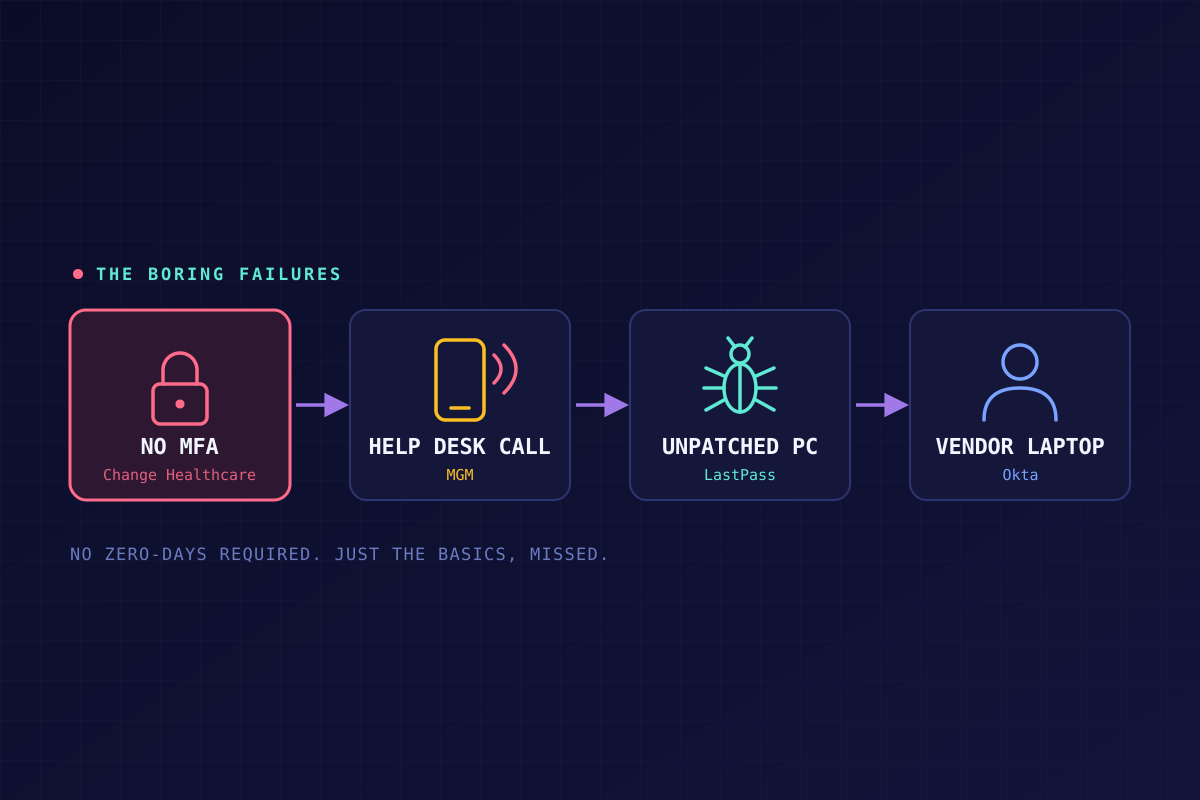
A missing MFA prompt, a help desk call, an unpatched home PC, a vendor's laptop. Four of five major breaches needed no clever exploit. Here's what Change Healthcare, MGM, LastPass, and Okta teach us.
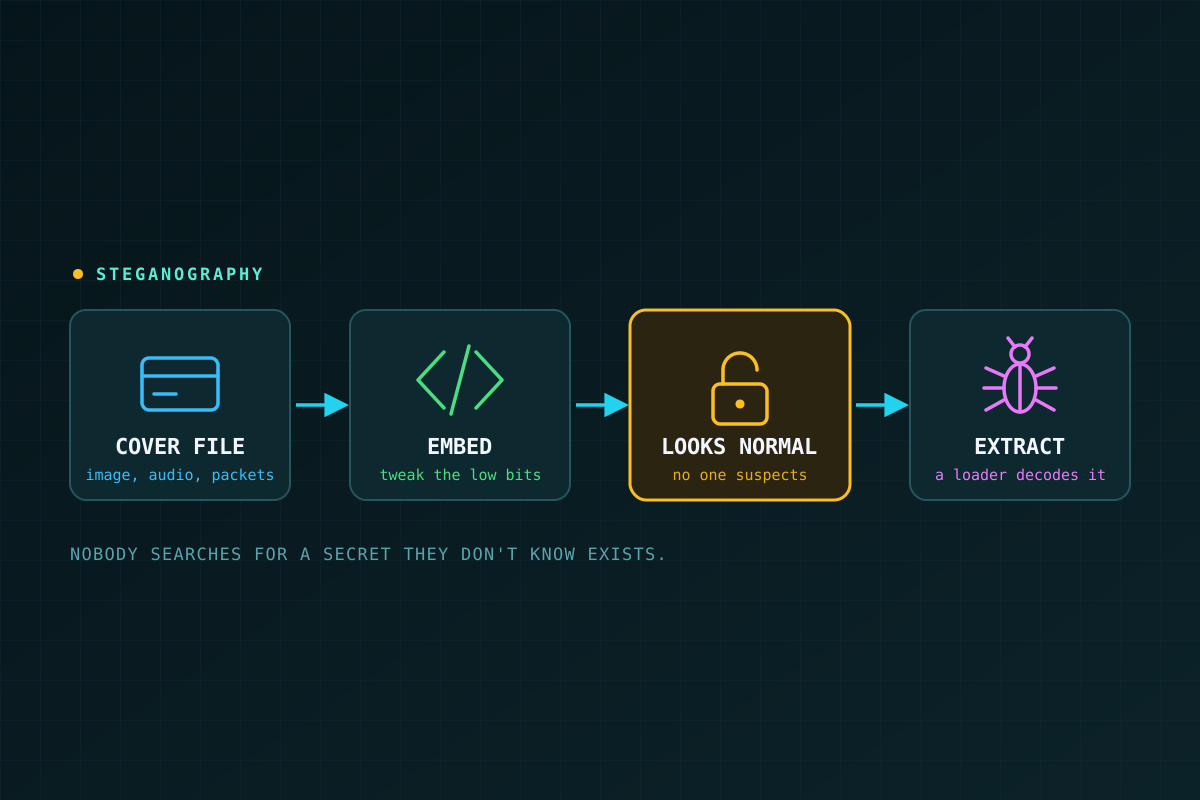
You can't decipher a message if you don't know it exists. How steganography hides data in images, audio, and packets, from Mr. Robot's CD collection to real malware, and how defenders catch it.
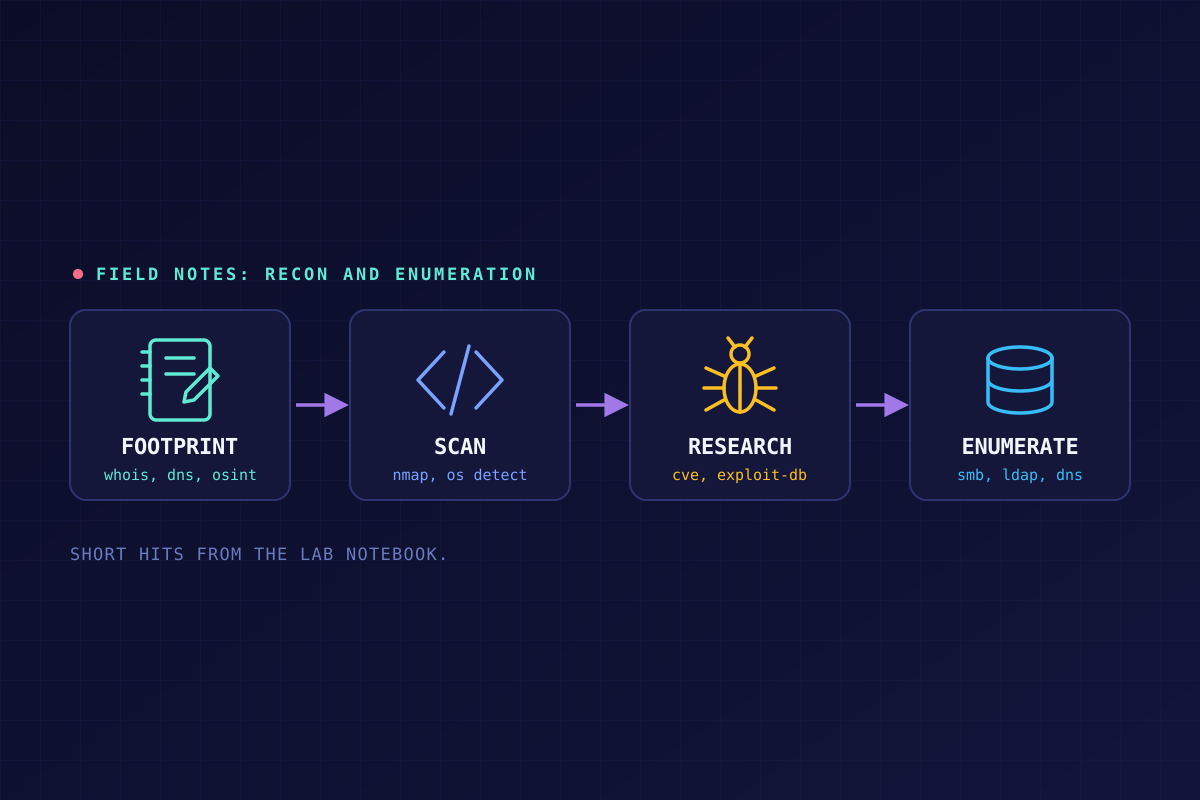
A whois lookup tells you who owns a domain, when it was registered, and sometimes reveals more than intended. It costs nothing and takes seconds, making it the first move in any penetration test or footprinting exercise.
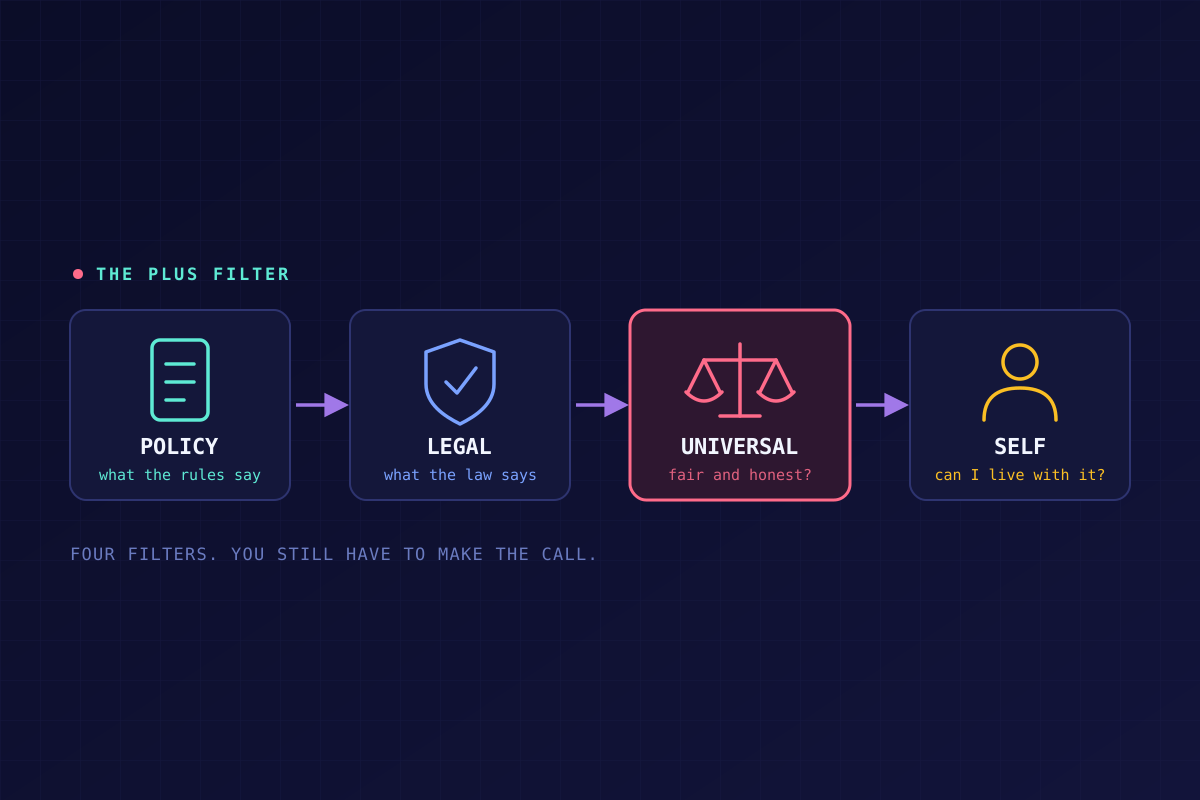
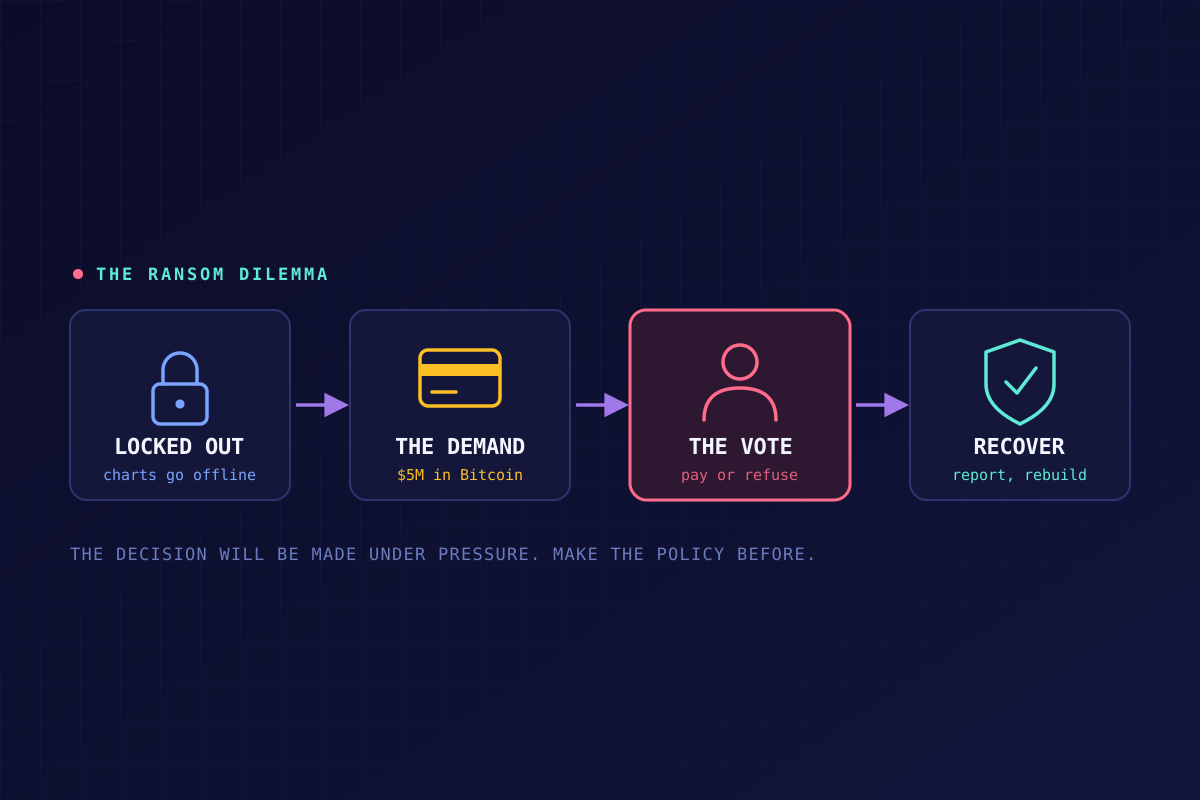
Two security dilemmas: a researcher whose vendor won't patch, and an engineer told to delete subpoenaed emails. Four questions (Policy, Legal, Universal, Self) show where the right call comes from.
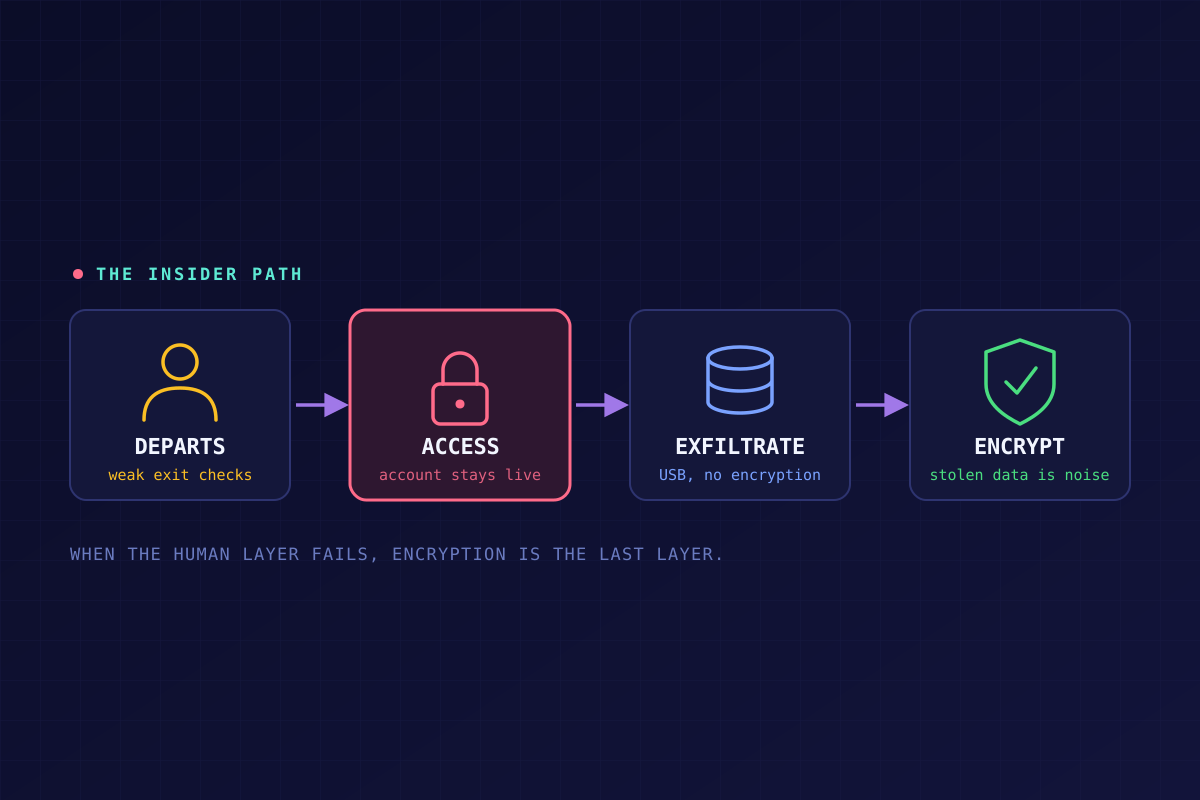
A fictional electronics giant loses its IP and financial data, and the likely culprit already had a badge. Here's how weak exit policy, loose USB rules, and unencrypted data let it walk out the door.
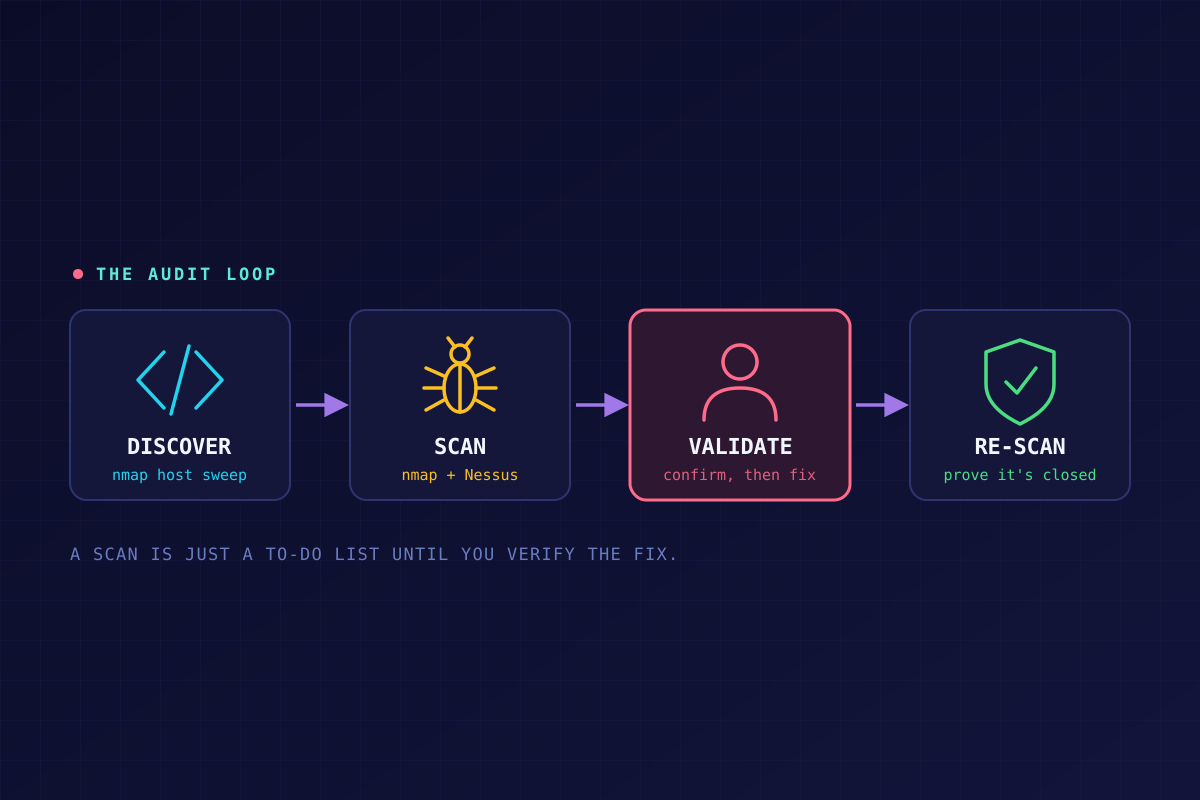
Nmap flagged a 10.0 on a Samba host. Here's a quarterly Nmap and Nessus scan routine, plus the validate, fix, and re-scan testing plan that turns raw scan results into vulnerabilities actually closed.
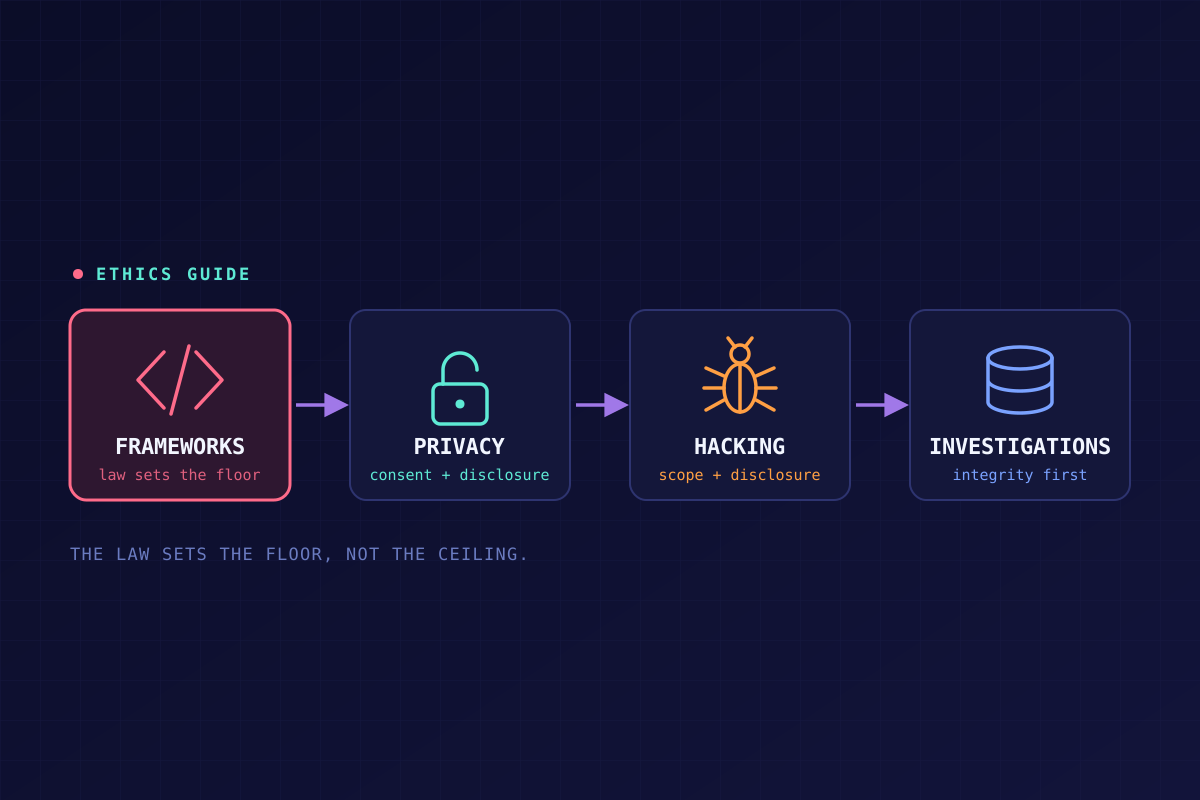
Cybersecurity professionals regularly face situations where what's legally allowed differs from what's ethically right. Understanding ethical frameworks helps you navigate these gaps and make decisions that protect both your organization and the public.
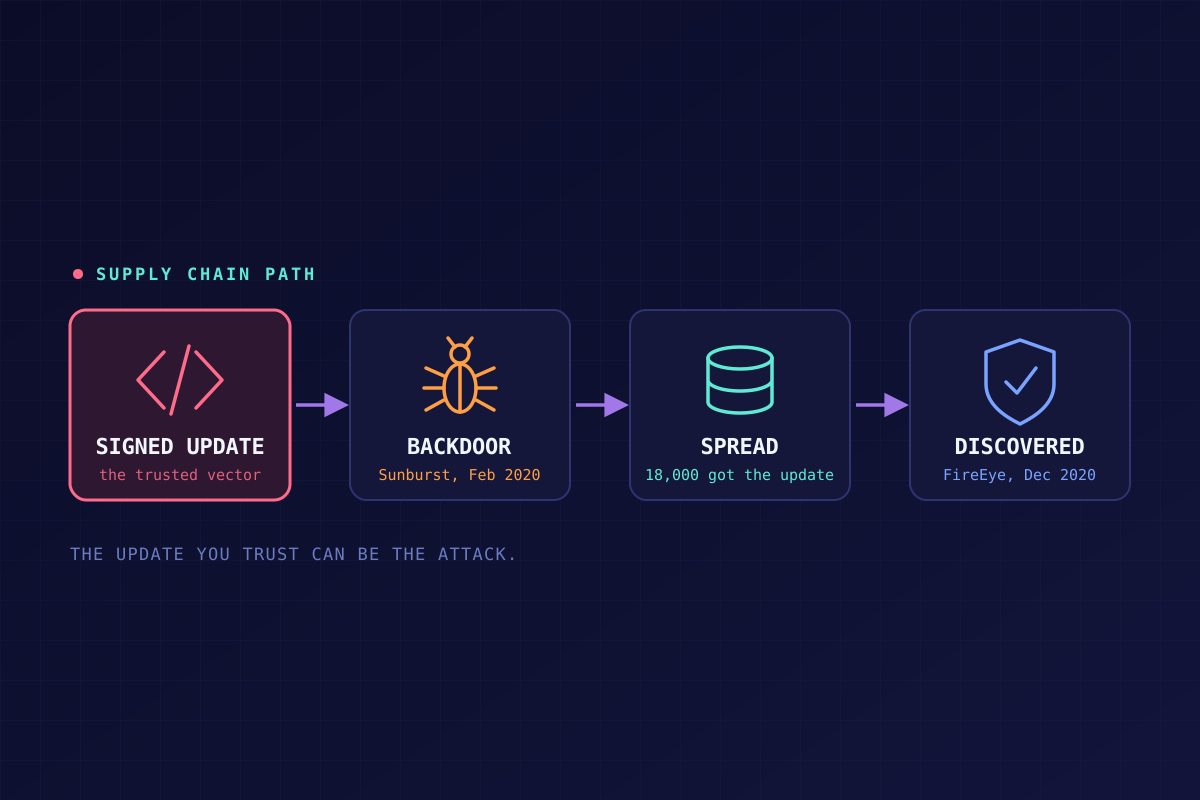
In December 2020, SolarWinds revealed one of history's largest security breaches. Hackers had spent months inserting malicious code into the company's software updates, which were digitally signed and trusted by nearly 18,000 customers including U.S. government agencies.