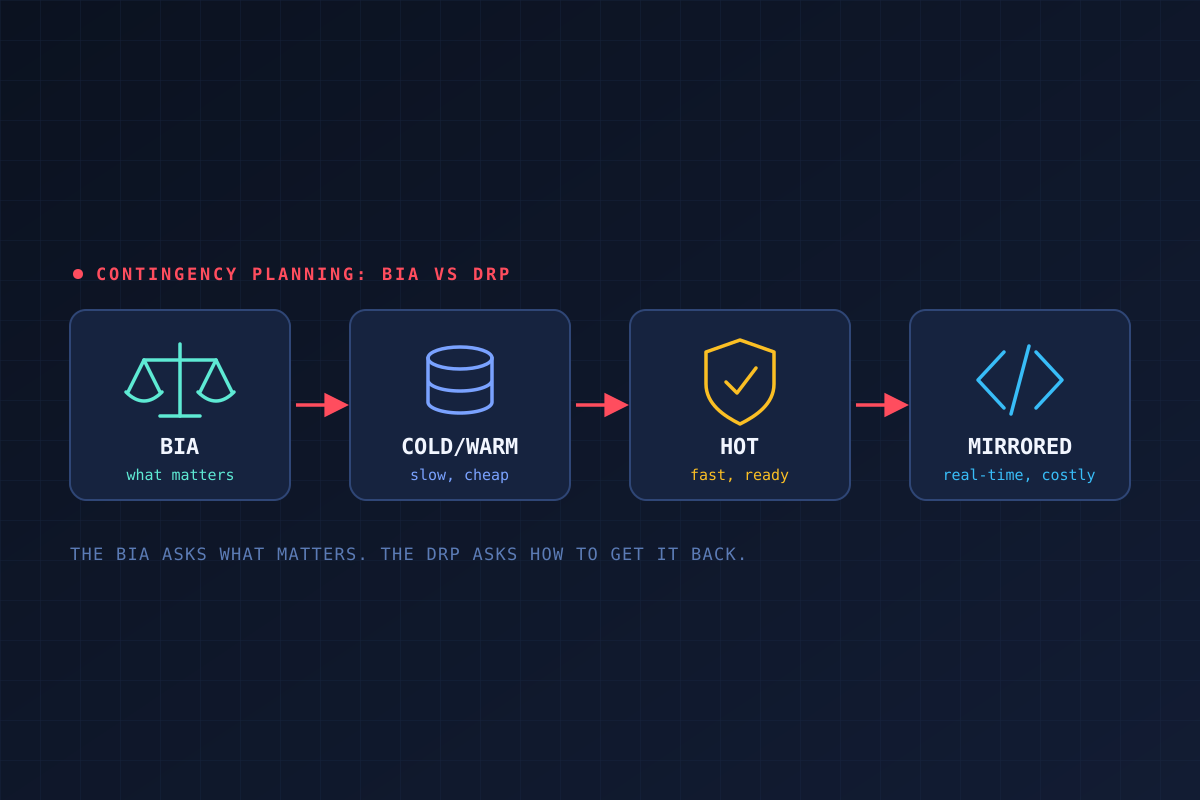
The BIA and the Disaster Recovery Plan get lumped together, but they answer different questions: one asks what matters most, the other asks how to get it back. NIST SP 800-34, the four site types, and
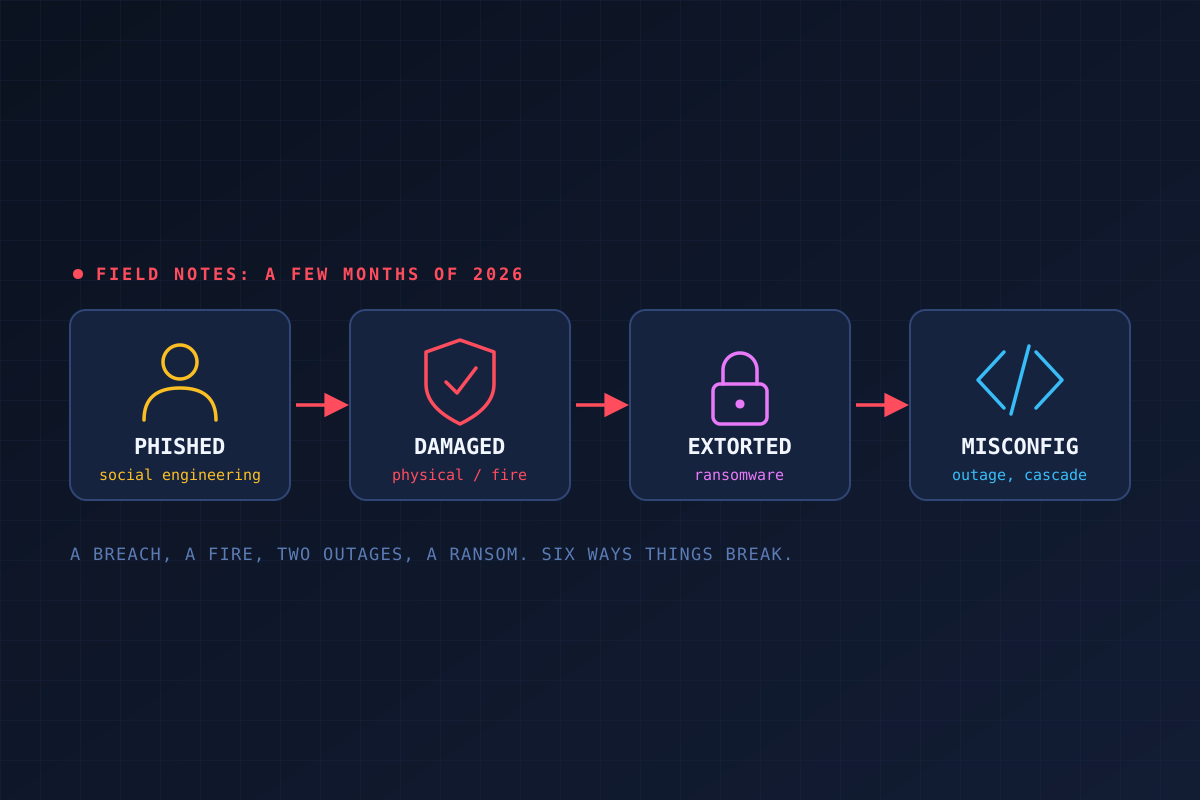
A few incidents from earlier this year are worth a quick look, less for drama and more because they're useful, concrete examples of how different "something went wrong" actually looks in practice.
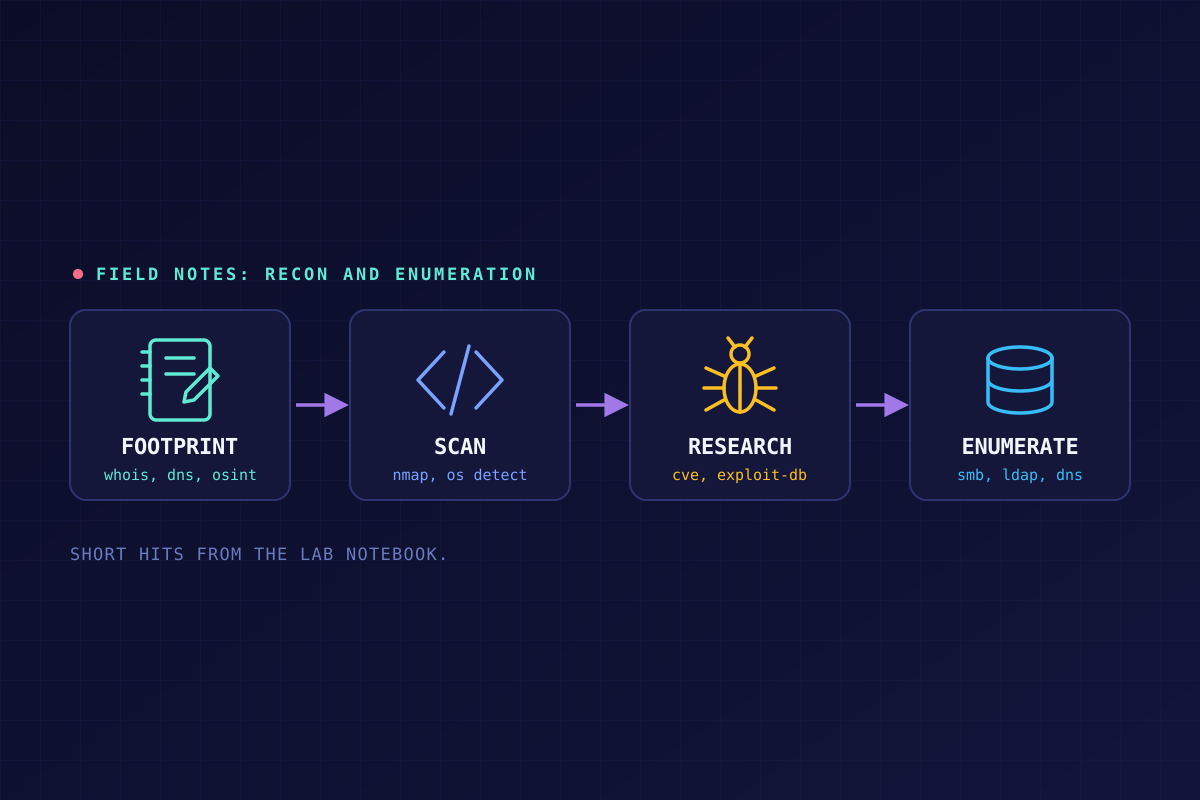
Once you're inside a network, you're basically blind until you enumerate it. Enumeration builds a working picture of the hosts, services, and accounts actually present, so you can plan a next move instead of guessing one.
OSINT is big enough that security professionals specialize in it full time. Here are five broad categories of exposure worth knowing about, with concrete steps to mitigate each one.
Once you've enumerated a target and know what OS and service versions are running, vulnerability research means checking whether what's installed is actually exploitable. Four acronyms—CWE, CVE, NVD, Exploit-DB—sound interchangeable but aren't.
Once you have a target IP or domain, nmap can tell you a lot: the operating system, the services running and their versions, and which ports are open. Here's the quick version of how the OS-detection side works.
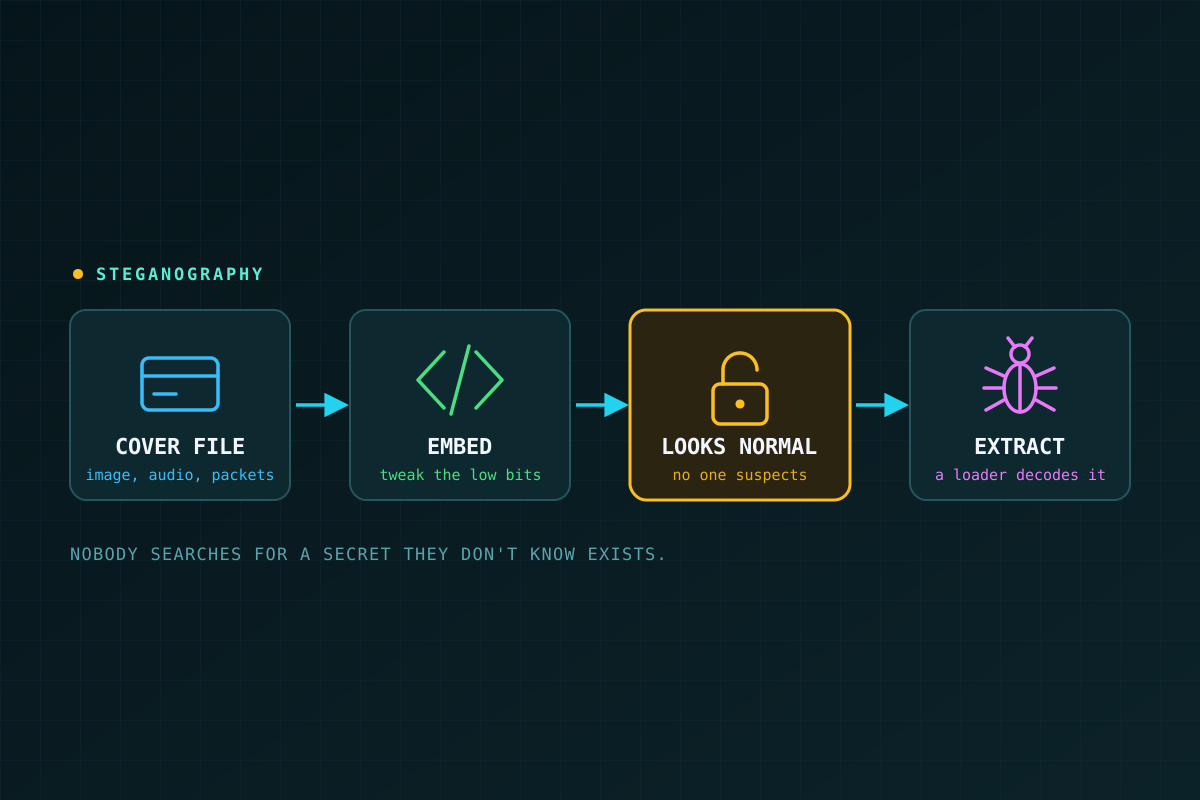
You can't decipher a message if you don't know it exists. How steganography hides data in images, audio, and packets, from Mr. Robot's CD collection to real malware, and how defenders catch it.
A whois lookup tells you who owns a domain, when it was registered, and sometimes reveals more than intended. It costs nothing and takes seconds, making it the first move in any penetration test or footprinting exercise.
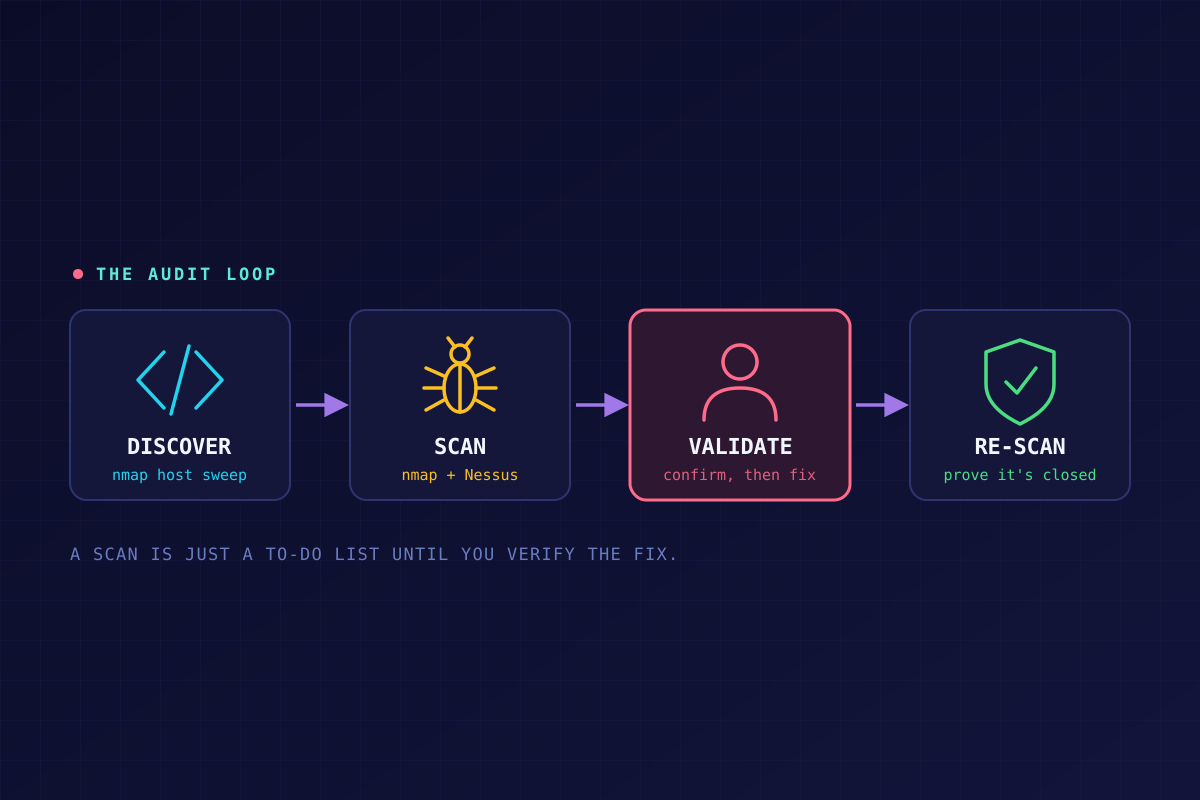
Nmap flagged a 10.0 on a Samba host. Here's a quarterly Nmap and Nessus scan routine, plus the validate, fix, and re-scan testing plan that turns raw scan results into vulnerabilities actually closed.
STRIDE turns cybersecurity's defensive principles into six threat categories: spoofing, tampering, repudiation, information disclosure, denial of service, and elevation of privilege. Developed at Microsoft in 1999, it gives teams a systematic way to ask what can go wrong and build fixes from the start.